No Permits, No Problem: The Rogue Parkour Leagues Taking Over Forgotten Industrial America
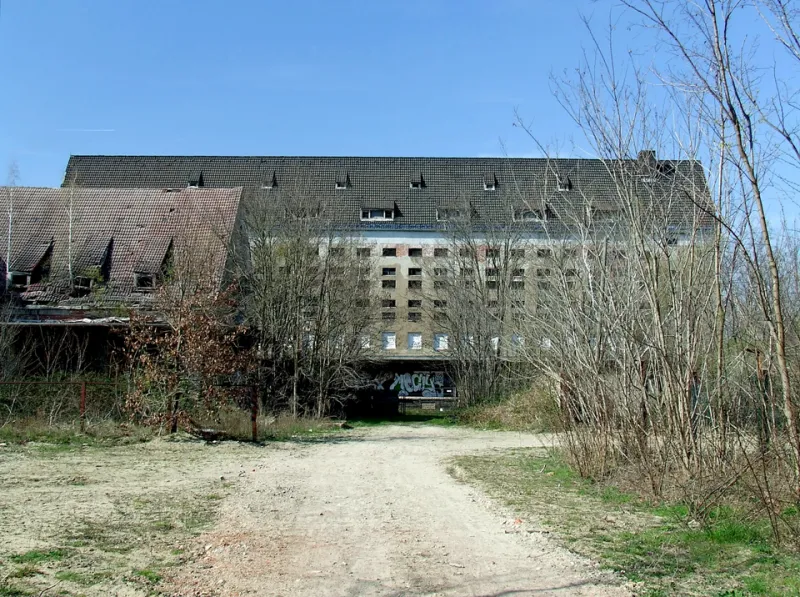
Photo: Trio3D, CC BY-SA 4.0, via Wikimedia Commons
The building used to make auto parts. Now it makes athletes.
Somewhere outside Detroit, in a complex that's been sitting empty since the recession hit harder than anyone expected, a crowd of maybe 300 people is watching a 22-year-old from Columbus clear a gap that looks physically impossible. He doesn't stick the landing perfectly — his right foot skids off a rusted beam — but he recovers, redirects, and keeps moving. The crowd loses its mind.
There's no official announcer. The lighting is a combination of industrial overheads and LED strips someone zip-tied to the rafters. The livestream is running on three iPhones mounted to scaffolding. And none of this — none of it — has a permit.
Welcome to the underground parkour circuit. It's louder, rawer, and more innovative than anything happening in mainstream sports right now.
How This Scene Actually Works
The organized underground parkour competition scene in the US isn't one thing. It's a loose constellation of regional organizers, Discord communities, and grassroots promoters who've figured out that the best athletic venues aren't the ones with sponsors on the scoreboard — they're the ones nobody else is using.
Abandoned warehouses, decommissioned rail yards, old textile mills in the Carolinas, shuttered malls in the Midwest — these spaces share a few key qualities. They're structurally complex in ways a purpose-built gym never could be. They're cheap to access (sometimes free, sometimes through informal arrangements with property owners happy to have someone keeping vandals out). And they have the kind of irregular, unpredictable geometry that makes parkour actually interesting to watch and compete in.
The athletes who compete in these leagues aren't weekend hobbyists. Many of them have been training for years, some with backgrounds in gymnastics, martial arts, or competitive freerunning. What they don't have is a mainstream venue willing to take a chance on them.
The Regulatory Gray Zone
Let's be real about the legal landscape here, because it's complicated and worth understanding.
Most of these events operate in what organizers euphemistically call "flexible regulatory territory." That means no formal venue permits, liability waivers that may or may not hold up in court, and a general philosophy of "move fast and clean up before anyone notices."
Some organizers have gotten smarter about this. A handful of promoters have started working with property management companies that hold distressed real estate — essentially pitching events as a way to generate activity and deter squatters. It's not a formal lease. It's more like a handshake agreement with plausible deniability baked in.
Others have gone the pop-up event route, filing for temporary entertainment permits in cities with more flexible ordinances. Austin, Pittsburgh, and Columbus have become somewhat friendlier territories for this kind of thing, partly because their urban cores have enough vacant industrial space that city officials are occasionally willing to look the other way if the event is organized and nobody gets hurt.
The liability question is where things get genuinely thorny. Most participants sign digital waivers, but the enforceability of those documents in a non-permitted venue is, to put it charitably, untested. Organizers know this. Athletes know this. Everyone shows up anyway.
The Sponsorship Hustle
Here's what's surprising: money is actually flowing into this scene, just not through traditional channels.
Small action sports brands — the kind making grip tape, minimalist footwear, and technical apparel for climbers and traceurs — have figured out that underground parkour events deliver something mainstream sponsorships can't: authenticity. The audience at these events isn't there because a marketing algorithm told them to be. They genuinely care about movement as a discipline.
Several regional organizers have locked in recurring sponsorships with brands in the $2,000–$8,000 per event range. Not life-changing money, but enough to cover production costs and pay athletes a modest appearance fee. A few larger events have started attracting interest from energy drink brands looking to escape the oversaturated extreme sports sponsorship market.
The livestream angle is where things get really interesting. Some of these events are pulling 10,000–40,000 concurrent viewers on Twitch and YouTube — numbers that would make a mid-tier esports tournament jealous. The production quality is scrappy, but the content is genuinely compelling. You can't fake the energy of 300 people watching someone land something that shouldn't be possible.
Why Traditional Venues Keep Losing
You might wonder why these athletes don't just compete in gyms or official venues. Some do. But the athletes and organizers who've built this underground circuit will tell you the same thing: purpose-built spaces are sanitized in a way that kills the sport's soul.
Parkour is fundamentally about reading and adapting to an environment that wasn't designed for you. A foam pit gym is great for training. It's a terrible place to watch a competition. There's no tension, no unpredictability, no sense that something genuinely difficult is happening.
An abandoned warehouse with uneven concrete floors, random structural obstacles, and variable lighting? That's a course that can't be memorized or perfectly optimized. Every run is different. Every athlete has to actually think in real time.
That's the friction — literal and otherwise — that makes this scene magnetic.
What Happens Next
The underground parkour circuit is at an inflection point. A few organizers are quietly talking to city economic development offices about legitimizing events in distressed urban zones. Others are resisting formalization entirely, convinced that a permit is the first step toward becoming something boring.
What's clear is that this ecosystem has figured something out that mainstream sports infrastructure hasn't: the best competitive environments aren't built from scratch. They're found. Repurposed. Jumped through.
The venues are already out there, rusting quietly in every mid-sized American city. Someone just had to be willing to use them.