Why Your Screen Time Is Killing Your Hops: The Dark Side of Parkour Content Consumption
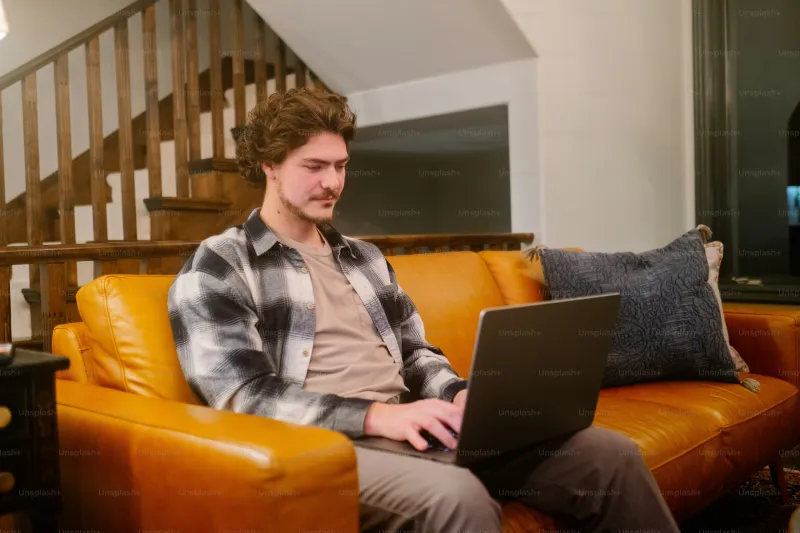
Photo: person watching parkour video on laptop sitting on couch instead of training outside, via plus.unsplash.com
There's a specific kind of Saturday that a lot of us know too well. You wake up fired up to train, crack open YouTube for "just a few minutes" of inspiration, and suddenly it's 3 PM and you've watched six hours of Storror edits without leaving the couch. You feel pumped. You feel ready. And yet, when you finally lace up and hit the street, your body feels like a stranger.
That's not a coincidence. That's your nervous system getting played.
The Illusion of Competence
Sports psychologists have a name for what happens when you watch skilled movement without actually doing it: the YouTube illusion effect. It's a cousin to the well-documented Dunning-Kruger effect, but it hits different for physical disciplines. When you watch an elite traceur float through a rooftop gap or chain three precision jumps with zero hesitation, your mirror neurons fire. Your brain registers some of that experience as familiar. It feels like learning.
But it's not.
"Observation activates the motor cortex, sure," explains movement coach Derek Haines, who trains athletes in Austin, Texas. "But there's a massive gap between passive activation and the kind of deep encoding that happens when your body is actually under load, making micro-corrections in real time. Watching a kong vault a thousand times doesn't build the proprioceptive feedback loop that one actual attempt does. Not even close."
The problem compounds when you factor in how algorithmically optimized parkour content has become. Platforms like YouTube and TikTok are designed to keep you watching — not moving. The dopamine hit from a clean edit is real, but it comes without the physical cost that makes skill development stick.
What's Actually Happening in Your Brain
Here's the neuroscience in plain English. Motor learning — the kind that lets you clear a six-foot gap or stick a wall run — depends on something called procedural memory. This gets encoded through repetition, failure, and physical feedback. Your cerebellum is the key player here, and it learns by doing, not by watching.
Passive viewing, on the other hand, lights up your declarative memory system — the part of your brain that stores facts and concepts. So after a marathon YouTube session, you might be able to describe a double kong with impressive technical detail. But your body has no idea how to execute it because those neural pathways haven't been carved through actual movement.
Worse, research from the Journal of Motor Behavior suggests that overconfidence from passive learning can actually increase injury risk. Athletes who believe they understand a movement tend to attempt it with less caution than beginners who know they're starting from zero.
"I've seen this with gamers who crossover into real-world training too," Haines adds. "They've played Mirror's Edge for five hundred hours and they genuinely believe their body knows what to do. Then they try a basic precision jump and completely misread the distance. The game gave them pattern recognition but zero physical calibration."
The Watch-to-Train Conversion Problem
So watching is bad? Not exactly. Observation has legitimate value in movement sports — but only when it's intentional and paired with physical follow-through. The issue is the ratio. Most athletes in the social media era are consuming at a 20-to-1 clip: twenty minutes of content for every one minute of actual movement work.
Flipping that ratio starts with changing how you watch.
Coaches who work with both parkour athletes and action gamers training for hybrid competitions are developing what some are calling active viewing protocols — structured ways to engage with video content that prime the body for practice rather than replace it.
A Framework for Turning Watch Time Into Real Gains
Step 1: Watch with intention, not ambiance. Pick one specific technique per session. Watch it isolated, slowed down, from multiple angles if possible. Don't let the autoplay algorithm pull you into a full highlight reel. Five focused minutes beats an hour of passive scrolling every time.
Step 2: Visualize with physical cues. After watching, close your eyes and run through the movement mentally — but engage your body while you do it. Tense the muscles involved. Simulate the weight shift. This bridges the gap between declarative and procedural memory systems.
Step 3: Hit the ground within 20 minutes. Research on motor priming suggests there's a short window after observation where your motor cortex is most receptive to encoding new patterns. Don't let that window close while you're watching "just one more" video. Get outside. Find a curb, a bench, a low wall — whatever approximates the movement you just studied.
Step 4: Train to failure, not to comfort. YouTube edits only show you the clean reps. Your brain needs the failed attempts just as much — maybe more. Falling short of a precision jump gives your cerebellum data it can't get from watching. Embrace the ugly reps.
Step 5: Record yourself and review critically. Now you can use video as a genuine learning tool. Filming your own attempts and comparing them to reference footage creates a feedback loop that actually rewires movement patterns. This is observation in service of doing — not a replacement for it.
The Bigger Picture
This isn't an anti-content take. The parkour community has built something genuinely remarkable online — a global library of movement knowledge that would've been unimaginable to the Yamakasi crew back in the '90s. And for action gamers building crossover skills, that content ecosystem is part of the appeal.
But the platforms profiting from your attention are not aligned with your athletic development. Every hour you spend watching instead of moving is an hour your nervous system spends building the wrong kind of familiarity.
The athletes who are actually progressing right now are the ones treating video content like a map — useful for orientation, useless as a substitute for the journey. They watch less and move more. They log their watch time and match it with training time. They treat the screen as a starting gun, not a finish line.
Next time you feel that familiar pull toward another highlight reel, ask yourself one question: is this making me better, or just making me feel like I am?
There's a difference. Your body knows which one it is.