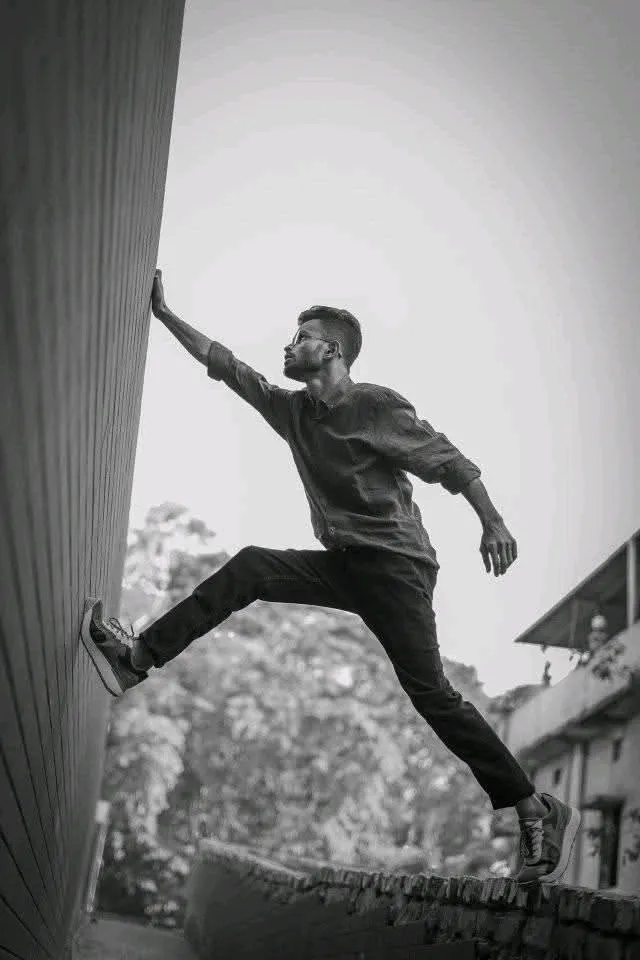
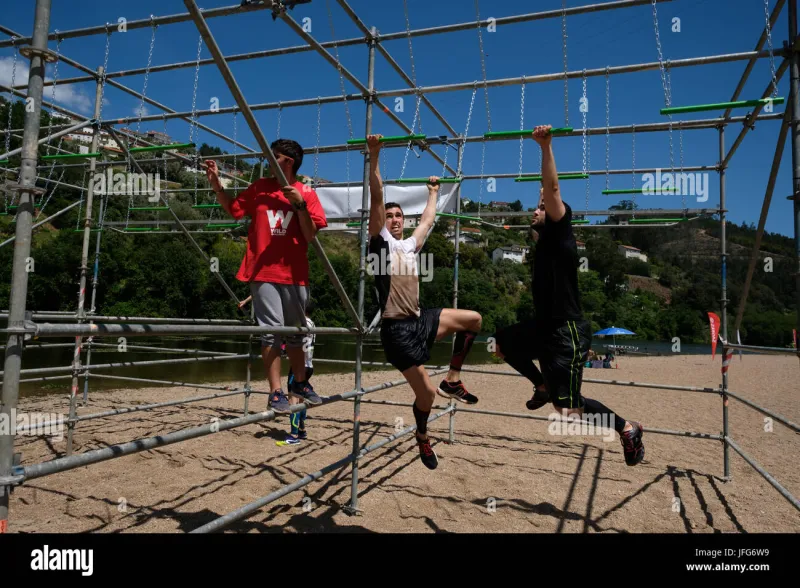
Your Phone Just Became Your Parkour Coach: Inside the AI Revolution Changing How Athletes Train
Photo: The National Paralympic Committee of Azerbaijan, CC BY-SA 4.0, via Wikimedia Commons
For most of parkour's history, getting better meant one thing: finding someone who already knew what they were doing and convincing them to watch you fail repeatedly. Maybe you had a local crew. Maybe you drove two hours to train with a coach at a gym that smelled like chalk and ambition. Or maybe you just watched YouTube clips on loop and hoped muscle memory would eventually kick in.
That whole model is cracking open. AI-driven coaching tools are arriving fast, and they're starting to do something genuinely impressive—they're making personalized, technique-level feedback accessible to anyone with a decent smartphone camera and a willingness to learn.
Breaking Down the Tech
At the core of most of these platforms is computer vision, the branch of AI that teaches machines to interpret visual information the way a human eye would. Pair that with pose estimation—algorithms that map key points on your body like joints, hips, and shoulders into a skeletal model—and suddenly your phone can "see" your movement the way a trained coach might.
What makes the newer generation of tools genuinely different is what happens after that initial capture. Early apps just overlaid a skeleton on your video and called it a day. Now, platforms are running that skeletal data through machine learning models trained on thousands of hours of professional and amateur athlete footage. The result? The app doesn't just show you your form—it understands it, compares it against reference benchmarks, and flags the specific deviation that's slowing you down or putting your joints at risk.
Think of it like spell-check, but for your body mechanics.
Frame-by-Frame Feedback Without the Ego Trip
One of the more underrated advantages of AI coaching is that it doesn't have bad days. It's not going to be less patient with you on a Tuesday afternoon, and it's not going to soften feedback because it doesn't want to hurt your feelings. For intermediate athletes especially—those awkward folks who are past beginner tutorials but not yet dialed enough to train at an elite facility—that objectivity is legitimately useful.
Several platforms now offer frame-by-frame breakdowns of movements like precision jumps, vaults, and wall runs. The system identifies the moment your center of gravity shifts off-axis, or flags the fraction of a second where your arms aren't positioned to absorb impact correctly. Some tools will literally draw trajectory lines over your footage, showing you where your body went versus where it should have gone.
For visual learners—and parkour tends to attract a lot of them—this kind of overlay feedback is almost addictive. You start watching your own clips the way you used to watch pros online, except now you're looking for the same micro-details.
Adaptive Difficulty: The Algorithm That Grows With You
Here's where things get genuinely exciting for the progression-minded athlete. Static tutorial systems—whether that's a YouTube playlist or a rigid curriculum at a training gym—operate on a fixed ladder. You do level one, you move to level two. Whether or not you've actually internalized level one is kind of up to you to figure out.
AI-powered platforms can break from that model entirely. By continuously analyzing your performance data, they can identify which elements of a movement you've genuinely mastered and which ones you're just clearing on a good day. That distinction matters enormously in a discipline where overconfidence is one of the leading contributors to injury.
Adaptive difficulty progression means the system might hold you at a foundational drill longer than a standard program would—not because it's being conservative, but because the data shows your landing mechanics aren't consistent enough yet. Conversely, if you're breezing through material, it can accelerate your path to more complex challenges without waiting for an arbitrary checkpoint.
Injury Prevention Before the Injury Happens
This might be the most consequential application of the whole technology stack, and it doesn't get talked about enough.
Parkour carries real physical risk. That's part of its appeal, honestly—the sport demands a genuine reckoning with consequence. But a huge percentage of training injuries aren't the result of attempting something too advanced. They're the result of accumulated bad habits: landing slightly wrong on the same ankle a hundred times before it finally gives out, or compensating for weak hips in a way that quietly destroys your knees over months of training.
AI coaching tools trained on biomechanical data can start identifying those compensation patterns early. Some platforms now flag what researchers call "injury risk indicators"—movement signatures statistically associated with overuse injuries or acute trauma—and prompt the athlete to address them before they compound. It's the kind of longitudinal analysis that used to require a sports medicine team and a motion capture lab.
Now it's running on the same chip that plays your Spotify.
The Limits of the Algorithm
None of this means AI is replacing human coaches anytime soon, and it's worth being honest about the gaps. The tactile dimension of in-person coaching—a hand on the shoulder to adjust posture, the read on an athlete's fear or hesitation—isn't something a phone camera captures. Context matters enormously in parkour, and algorithms can struggle with environmental variables: surface texture, weather conditions, the psychological weight of height.
There's also the community question. A huge part of what makes parkour culture stick for young athletes in the US is exactly that—culture. The crew, the spot, the shared language of movement. An app can analyze your kong vault, but it can't replace the experience of your crew losing their minds when you finally stick a line you've been working on for three weeks.
The smartest players in this space seem to understand that. The most promising platforms are positioning themselves as training supplements, not replacements—tools that help you get more out of your sessions rather than substitutes for the sessions themselves.
What's Coming Next
The trajectory here is pretty clear. As edge computing gets faster and mobile cameras get sharper, real-time feedback during movement—not just post-session review—is becoming increasingly viable. A few platforms are already experimenting with audio cues delivered mid-drill based on live pose analysis. The latency isn't quite there yet for dynamic, high-speed movements, but it's getting close.
Augmented reality integration is another frontier. Imagine training overlays that project target landing zones or movement guides into your actual environment through AR glasses. It sounds like science fiction, but the underlying tech is already being prototyped in adjacent athletic training contexts.
For freerunners, the implications are significant. The gap between having access to elite coaching and training alone in a parking garage is narrowing faster than most people realize. That's a genuinely democratizing shift—and for a discipline that's always thrived on accessibility and self-determination, it feels pretty on-brand.