Pixels to Pavement: How Parkour Games Are Secretly Building Real Athletes
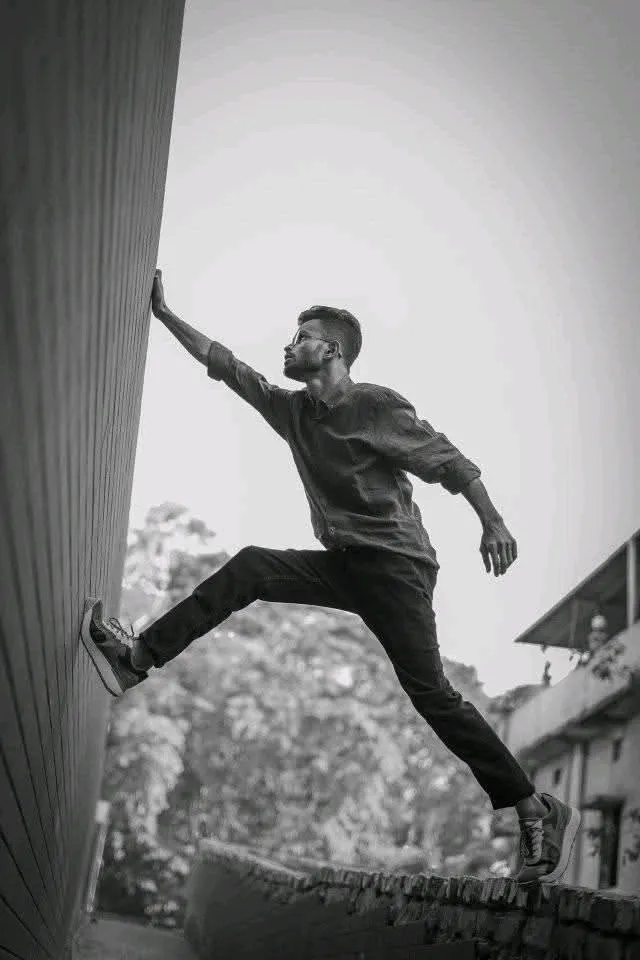
Photo: Sazzadghanem, CC BY 4.0, via Wikimedia Commons
When the Controller Becomes a Coach
There's a moment in Mirror's Edge where Faith — the game's red-sneakered protagonist — hesitates at the edge of a rooftop before launching into a precision jump across a gap that would make most people's palms sweat. For most players, it's just a thrilling animation. But for a growing community of real-world parkour athletes across the US, that split-second digital decision is something far more valuable: a mental rehearsal tool.
It sounds wild, right? Gaming as cross-training. But talk to enough people in the parkour community — from weekend warriors running urban trails in Portland to professional athletes competing in the World Chase Tag circuit — and you start to hear the same thing over and over: the games got them thinking differently about movement.
"I used to just see a wall," says Marcus Delray, a 24-year-old traceur based out of Chicago who started playing Assassin's Creed at age 12. "After hundreds of hours finding routes through those virtual cities, I started seeing the same lines when I walked to school. The ledges, the gaps, the angles — it all clicked."
That kind of spatial rewiring isn't just anecdotal. Coaches in action sports have started paying attention.
The Physics Question: How Accurate Are These Games, Really?
Not every parkour game earns a passing grade when it comes to movement realism. Some titles — looking at you, early Dying Light — lean hard into superhuman ability, letting players wall-run for improbable distances or absorb falls that would snap ankles in real life. Others take a more grounded approach.
Mirror's Edge Catalyst, released in 2016, remains a benchmark for movement authenticity in gaming. DICE's development team reportedly consulted with real freerunners during production, and it shows. The game's momentum system punishes players for breaking flow, rewards smooth transitions, and actually simulates the kind of fatigue decision-making that real athletes deal with mid-run.
"What they got right was the idea that bad technique costs you energy," explains Jordan Kwon, a parkour coach and movement researcher in Austin, Texas. "In real training, we talk a lot about efficiency — taking the path that preserves the most momentum. Mirror's Edge literally built that into its scoring system. That's not an accident."
The Assassin's Creed franchise, while far more fantastical, scores points in a different area: environmental reading. Ubisoft's massive open-world cities — from Renaissance Florence in AC2 to ancient Athens in Odyssey — train players to scan architecture for movement opportunities. Ledges, handholds, awnings, scaffolding. Real traceurs call this "seeing the line," and games like AC have introduced that concept to millions of players who'd never set foot on a rooftop.
What the Pros Are Actually Saying
We reached out to several professional athletes in the American parkour and freerunning scene to get their honest takes. The responses were more enthusiastic than we expected.
Tamara Voss, who competes in freerunning events across the Southeast and has trained with Red Bull's action sports team, was blunt about it: "Gaming helped me get over fear before I ever touched a real obstacle. Mentally running through a route in a video game — failing, restarting, finding a better path — that's repetition. That's training."
She's onto something that sports psychologists call "mental simulation" — the practice of visualizing movement sequences to reinforce neural pathways. Athletes in sports from gymnastics to motocross have used visualization techniques for decades. Video games, it turns out, may be a more immersive and interactive version of that same process.
Not everyone's fully on board, though. Damon Reyes, a veteran coach who runs a parkour gym in Denver, offers a measured take. "Games are great for inspiration and for getting people excited about movement. But they can also create bad habits — like expecting every jump to feel floaty, or underestimating how much upper body strength a real cat leap takes. You still have to put in the physical work."
Fair point. No amount of button-mashing replaces the muscle memory built from thousands of actual reps on real obstacles.
A New Generation of Athletes Is Paying Attention
Here's what's undeniable: the pipeline from gaming to parkour is real, and it's growing. Communities on Reddit's r/parkour and Discord servers dedicated to urban movement are full of stories from people who credit games with sparking their interest in real-world training. Gyms across the US report upticks in younger members who mention Dying Light, Ghostrunner, or Mirror's Edge as their entry point into the sport.
And the crossover is starting to flow in the other direction, too. Some game developers are now actively recruiting freerunners as motion capture performers and movement consultants — not just for parkour titles, but for action games across the board. The authenticity bar is rising.
Title like Ghostrunner and the upcoming Neon Parkour (an indie title currently in development with a heavy community-feedback focus) are pushing even harder into realistic movement physics, with studios openly discussing their partnerships with real athletes on social media.
So, Should You Game Your Way to Better Movement?
Here's the F-Jump take: use every tool available. Gaming won't replace mat time, gym sessions, or getting outside and practicing falls on actual concrete. But as a mental cross-training tool — for route visualization, spatial awareness, and just falling in love with the idea of fluid movement — parkour video games are genuinely underrated.
Next time someone gives you grief for gaming instead of training, tell them you're working on your line selection. Because honestly? You kind of are.
Start with Mirror's Edge Catalyst if you want the most grounded experience. Layer in Assassin's Creed Origins or Valhalla for environmental scanning practice. And if you want something that'll get your heart rate up even through a controller, Ghostrunner 2 is absolutely worth your time.
The streets will still be there when you put the controller down. And you might just see them differently.