Small Studios, Big Air: How Indie Parkour Games Out-Move the Open-World Giants

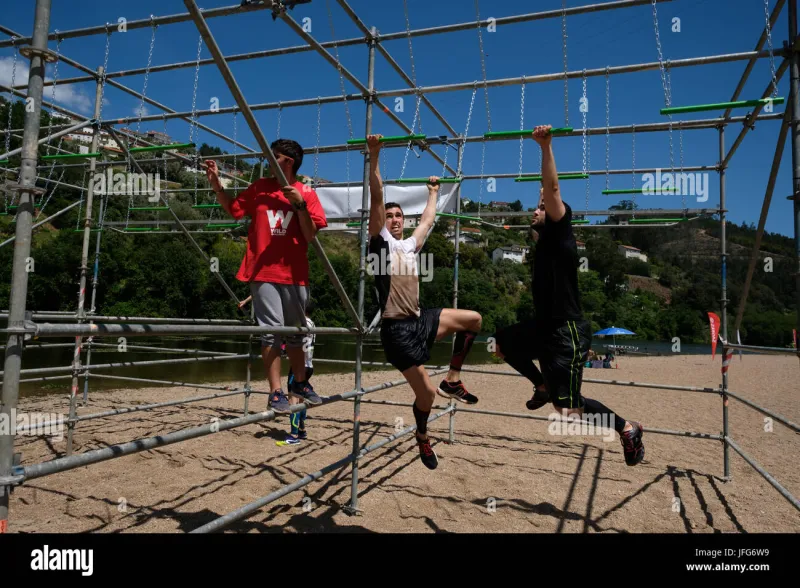
Photo: Sazzadghanem, CC BY 4.0, via Wikimedia Commons
There's a moment every parkour gamer knows. You're sprinting across a rooftop, you clip a ledge at the wrong angle, and instead of catching yourself in a fluid recovery, your character does this weird, floaty stumble — like they're moving through wet concrete. You didn't mess up. The game did. And it cost you the run.
Now flip that. Think about the last time a smaller, lesser-known parkour title made you feel genuinely fast. When vaulting felt like second nature and the environment seemed to respond to your momentum instead of fighting it. Odds are, that wasn't a $200 million production. It was probably something you almost scrolled past on Steam.
So what's the deal? Why do indie parkour games so consistently deliver superior movement while open-world titans with armies of developers keep shipping controls that feel like driving a truck through a sandbox?
The Curse of the Infinite Map
Here's the brutal truth about open-world design: when your game world is the size of Rhode Island, movement becomes a delivery mechanism. You need to get from Point A to Point B. The journey is secondary to the destination. Studios building massive open worlds are essentially designing transportation systems with a fun coat of paint on top.
Parkour, as any traceur will tell you, is the opposite philosophy. It's entirely about the journey. Every wall, every gap, every rail is a decision point — a micro-challenge that demands your full attention for a half-second.
When you build a game around that idea, the movement system has to carry the entire experience. There's no sprawling quest log to fall back on. No world map stuffed with icons to distract you. It's just you, the environment, and whether the controls hold up under pressure.
That pressure is exactly what forces indie developers to get it right.
Momentum Is the Whole Game
Ask any parkour athlete what separates a clean run from a sloppy one, and they'll say the same thing: momentum management. You're not just moving through space — you're converting energy from one surface to the next without bleeding speed.
The best indie parkour games encode this principle at the physics level. Speed has weight. Jumps feel different depending on your approach angle. Landing wrong costs you something real — not just a health bar, but actual velocity. The game rewards you for thinking like a traceur instead of just mashing buttons.
Larger studios, by contrast, often smooth these systems out in the name of accessibility. Players complained that the controls felt punishing, so the team added auto-assist. Testers said the vaulting was inconsistent, so the engine added a generous snap-to-ledge system. One by one, the rough edges get filed down — and what's left is a movement system that never quite pushes back.
Parkour without pushback isn't parkour. It's jogging with good animations.
Environmental Feedback Loops
One thing indie studios do extraordinarily well is environmental storytelling through movement itself. The architecture isn't just a backdrop — it's a conversation.
A rusted fire escape that shakes when you land. A chain-link fence that slows your vault by a fraction of a second. A rain-slicked concrete ledge that subtly reduces your grip. These aren't cosmetic details. They're mechanical signals that tell you how to move, rewarding players who read the environment the way real athletes do.
Big open-world titles tend to homogenize surfaces. Whether you're vaulting a wooden crate or a marble fountain, the animation plays out the same. The game doesn't care about material physics. It cares about not breaking the player experience for the 80% of users who just want to see the story.
That's a totally valid design choice — for that kind of game. But it's also why those games will never feel like parkour, no matter how many free-running animations they license.
Why Constraint Breeds Better Design
Limited budgets force a kind of creative discipline that money can actually work against. When you can only build ten environments instead of a hundred, you spend serious time making sure each one is mechanically interesting. Every ledge placement is intentional. Every gap is tested obsessively.
Smaller teams also move faster through iteration. A two- or three-person dev crew can redesign a movement system in a week based on playtester feedback. A studio with 400 people and a milestone schedule? That same change goes through six approval layers and might ship in a patch six months later.
The result is that indie parkour games often feel tuned in a way big productions don't. Like a custom-built BMX bike versus a department store mountain bike — both get you places, but one was built by someone who actually cares about the ride.
What AAA Could Learn From the Jump
None of this is a knock on big studios as a whole. Some of the most technically impressive movement systems ever built came from major publishers. But technical impressiveness and feel are two completely different things.
The studios that get movement right — at any budget level — tend to share one trait: they treat the player's body as a physics object with real constraints, not a camera on legs. Momentum matters. Angles matter. Surface material matters.
If the giants want to catch up, the blueprint is already out there on indie storefronts for $15. It just requires the willingness to let the game push back a little.
And honestly? That's the whole point of the jump.