Couch Mode Is the Default: The Hidden Design Trap Inside Your Favorite Action Games

Photo by Photo by Vitaly Gariev on Unsplash on Unsplash
Your avatar just pulled off a perfect wall-run sequence, vaulted a crumbling ledge, and stuck a landing that would make a professional traceur nervous. You, meanwhile, have been horizontal on a sectional couch for four hours with a bag of pretzels within arm's reach.
This is the central paradox of action gaming in 2024, and it's weirder than most of us stop to acknowledge. The games best at simulating extreme physical performance are often the ones most aggressively designed to keep players completely still.
It's not an accident. It's architecture.
How Game Design Keeps You Locked In
Game designers have spent decades perfecting what the industry calls "engagement loops"—systems that make stopping feel costly and continuing feel rewarding. These mechanics are genuinely brilliant from a design standpoint, and genuinely problematic from a health one.
Take the checkpoint system. Modern action games space save points and progress markers in ways that subtly discourage breaks. You're always "almost" at the next checkpoint. Standing up feels like leaving money on the table. That's intentional friction—designers know that a player who pauses is a player who might not come back.
Then there's the progression drip. XP rewards, unlockable cosmetics, and daily challenge timers create artificial urgency. Log in every day or miss the reward. Stay in one more session or fall behind the seasonal track. These systems are borrowed from mobile gaming and casino design, and they work on the same psychological wiring.
None of this is a conspiracy. It's just optimizing for the metric that matters commercially: time spent in-game. The side effect is that games themed around peak physical performance often produce peak physical inertia in their players.
The Irony Isn't Lost on Everyone
We talked to several game designers who are actively uncomfortable with this dynamic—particularly those working on titles in the parkour, extreme sports, and action-adventure space.
"There's something genuinely strange about shipping a game where the character is doing things that require years of physical training, and the design intent is for the player to never move," said one designer at a mid-sized studio who asked to stay anonymous due to NDA restrictions. "We talk about it internally. Not everyone thinks it's a problem, but some of us do."
Another designer, working on an indie title in early access, was more direct: "The AAA model optimizes for session length. That's the north star. Everything else—including player health—is secondary. We decided to invert that priority and see what happens."
What happens, apparently, is a smaller but more physically engaged player base—and a game that's generating serious buzz in the fitness-gaming crossover community.
The Titles Trying to Break the Pattern
A handful of developers are experimenting with mechanics that actually penalize extended sedentary play. These aren't just fitness games with a sports skin—they're genuine attempts to make physical movement a competitive advantage.
Stridefall (PC/console, early access) uses a real-time fatigue system that mirrors in-game character performance to player input intensity. Players who use motion controllers and maintain active input patterns unlock enhanced character abilities. Sitting still and button-mashing doesn't cut it—the game detects passive play patterns and degrades character performance accordingly. It's a small studio out of Austin, and their approach is getting attention from both the fitness tech and game design communities.
UrbanRun VR takes a different angle, building its entire competitive multiplayer structure around physical output tracked through VR headset and controller motion data. Your character's speed and stamina in-game are directly calculated from how much you're actually moving. Top leaderboard players are legitimately more physically active than lower-ranked ones—the correlation is built into the scoring system.
Apex Kinetics, still in development, is the most ambitious attempt we've seen. The studio is designing a parkour-themed competitive title where in-game cooldown timers for special moves are reduced by real-world physical activity tracked through a companion app. Do ten minutes of actual movement and your character gets faster in-game. It's a feedback loop that runs both directions.
The Technology Making This Possible
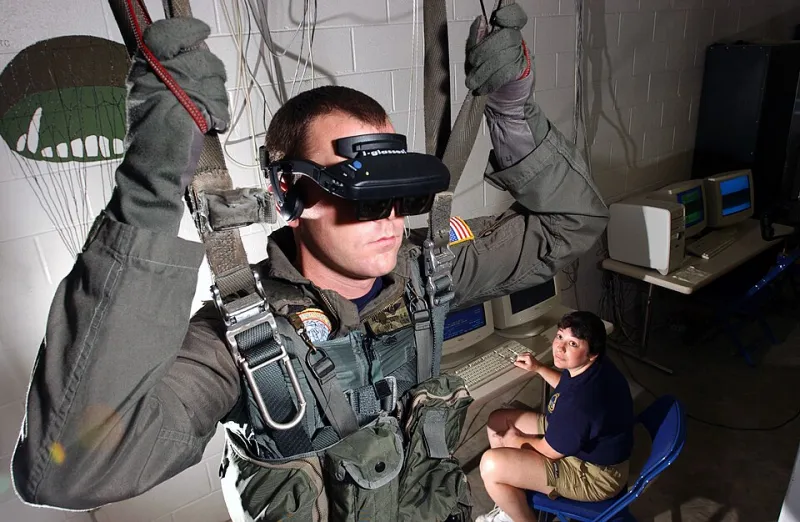
These design experiments aren't happening in a vacuum—they're enabled by a generation of hardware that makes tracking physical input actually feasible at consumer scale. Modern VR headsets have inside-out tracking capable of capturing full-body movement data. Smartwatches and fitness wearables can pipe biometric data into companion apps in real time. Even standard game controllers now carry accelerometers sophisticated enough to detect whether someone is actively engaged or just resting a thumb on a joystick.
The infrastructure for fitness-integrated gaming exists. The design will to use it is the variable.
Does It Actually Work as a Game?
Fair question. Fitness mechanics are only meaningful if the game underneath them is worth playing. We've seen plenty of motion-control gimmicks that died because they prioritized novelty over actual gameplay quality. The Wii Sports era left some scars.
The developers we spoke to are aware of this trap. The goal, as one put it, is to make physical engagement feel like a competitive advantage rather than a tax on playing the game. "If moving makes you better at the game, players will move. If it just makes the game harder, they'll find a workaround or quit."
That distinction matters. Penalizing inactivity and rewarding activity are mechanically different approaches, and the reward-based model has a much better track record for sustained player engagement.
Where This Goes From Here
The honest assessment is that mainstream action gaming isn't pivoting away from couch-friendly design anytime soon. The commercial incentives are too strong and the player base too accustomed to passive play. But the edges of the industry are genuinely experimenting, and those experiments are getting more sophisticated.
For the F-Jump audience—people who actually run obstacles, train movement, and understand what it costs physically to do what their game avatars do effortlessly—the gap between on-screen action and real-world engagement has always felt a little absurd. The developers building toward a different model are at least asking the right question.
What if the game rewarded you for moving like your character? What if getting better at the game made you better in real life?
That's not a fitness app. That's actually interesting game design. And it's starting to show up on actual release schedules.