Glitch Runners: How Speedrunners Are Turning Broken Games Into the Most Creative Movement Sport Alive
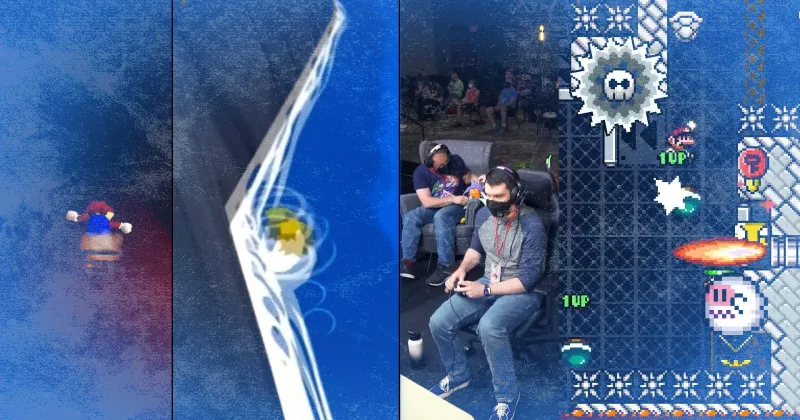
Photo: gamer speedrunning action video game with multiple monitors showing movement mechanics and glitches, via yourgames.tv
At some point in the development of Titanfall 2, a programmer wrote a line of code that made wall-running feel buttery smooth. That was intentional. What wasn't intentional was the way players discovered they could chain bunny hops, slide-cancel into a wall run, and generate enough momentum to cross entire maps in seconds — moves that exist nowhere in the game's tutorial, its design documents, or its official competitive ruleset. They emerged from the gap between what the engine could do and what the developers thought it could do.
That gap is where some of the most creative movement athletes alive are currently living.
The Art of Breaking Things
Speedrunning has always had a subversive energy. Since the early days of Doom runners clipping through walls and Mario players finding warp pipes, there's been a community dedicated to stress-testing games until they crack — and then sprinting through the cracks faster than anyone thought possible. But something has shifted in the last five years.
The glitch-hunting scene has evolved from a niche technical hobby into something that looks a lot like a competitive movement discipline. And nowhere is that clearer than in action games and VR platforms, where players are discovering physics exploits that turn corporate-approved software into something closer to a digital skate park — if the skate park was designed by a glitchy fever dream.
"The way I think about it, every game engine is basically a set of physical laws," says Marcus Webb, a 24-year-old speedrunner from Portland who holds top-five times on three separate Mirror's Edge: Catalyst categories. "The developers decide what those laws are, but they can't predict every interaction. When you find a bug that lets you do something they never intended, you're not cheating — you're doing science."
Accidental Parkour Simulators
Some of the most celebrated movement exploits in gaming history read like parkour trick lists. The Dishonored series has an entire community built around chaining blink teleports with momentum conservation to achieve movement arcs that the game's designers never mapped. Ghostrunner — already a game built around fluid wall-running — has a speedrun meta that involves canceling animations mid-frame to generate velocity the engine wasn't supposed to allow.
VR platforms have opened an entirely new frontier. Boneworks and its successor Bonelab were designed with physics-based interaction, and players almost immediately started discovering that the game's body simulation could be exploited to generate movement that felt less like a video game and more like watching a traceur navigate a hallucinated obstacle course. Clips of players essentially inventing new movement vocabulary in real time circulate on speedrunning Discord servers and Twitch channels with the same reverence that parkour edits get in the freerunning community.
"There's a direct parallel to what street skaters did with handrails and ledges," says Jess Okonkwo, a game design instructor at a university in Chicago who researches player creativity. "Architects built those features for one purpose. Skaters looked at them and saw something completely different. Glitch runners are doing the same thing with code."
Publisher Pushback — and the PR Tightrope
Not everyone in the industry finds this charming. Some publishers have responded to popular exploits with patches that eliminate the unintended mechanics, triggering genuine community backlash. When Destiny 2 patched out a movement exploit that allowed Hunters to chain jumps across distances the map wasn't built to accommodate, the response from the movement community was swift and vocal. Bungie eventually walked back parts of the change after player outcry.
Other studios have quietly let exploits persist — or even coded acknowledgment of them into later updates. The Halo franchise has a long history of tolerating and occasionally celebrating the grenade-jump and crouch-cancel communities that grew up around its games. 343 Industries has, at various points, hired speedrunners as consultants.
The tension is real and it's not going away. Patches that fix "bugs" often destroy entire competitive ecosystems that have grown around those bugs. From a publisher's perspective, unintended mechanics create support headaches, potential exploit abuse in multiplayer, and inconsistent player experiences. From the community's perspective, they're being handed a gift and then having it taken away.
"When you patch out a movement tech, you're not fixing a bug," Webb says flatly. "You're deleting a sport."
Designing for Chaos
Here's where things get genuinely interesting from a design standpoint: a small but growing group of developers are starting to ask whether building intentional flexibility into movement systems — designing for creative misuse from the ground up — might be the next evolution of action game design.
Games like Neon White and Ghostrunner were built with speedrunners in mind, baking movement optimization into their core loop. But the next step might be something more radical: physics systems deliberately architected to be exploitable, movement engines designed with enough loose connective tissue that players can invent mechanics the developers never imagined.
Okonkwo calls this generative movement design. "The most beloved movement games all have one thing in common — they reward players for thinking about movement in ways the tutorial never taught them. What if you made that the explicit goal? What if the game shipped with intentional seams in the physics, and the community's job was to find them?"
It's a provocative idea, and it maps directly onto what the parkour community has always understood about urban environments: the best training grounds are the ones that weren't designed for you.
The Underground Is the Frontier
For now, the glitch-running scene operates in a gray zone — celebrated by communities, tolerated or contested by publishers, and largely invisible to mainstream gaming coverage. But the movement quality on display in top-tier speedrun videos is genuinely extraordinary. Watching a skilled player navigate a broken physics interaction in real time, adjusting on the fly to maintain momentum through a sequence of unintended mechanics, has an unmistakable kinetic energy.
It looks, honestly, a lot like parkour.
And maybe that's the point. The human impulse to find creative movement paths through whatever environment you're given — digital or physical, intended or accidental — doesn't stop just because a developer drew a boundary. It finds the gap. It slips through.
That's always been the whole idea.