Scrolled Into Existence: How the FYP Is Quietly Dictating What Parkour Looks Like in 2025
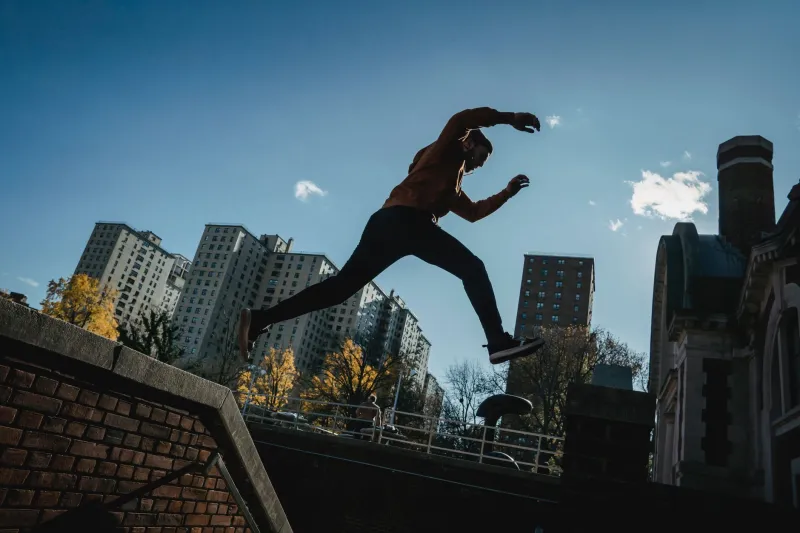
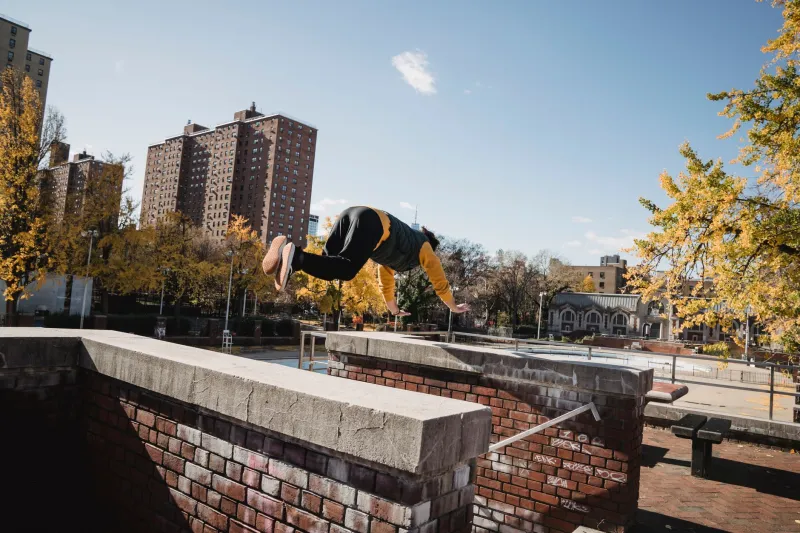
Nobody at TikTok headquarters sat down and decided what a parkour obstacle should look like. No product manager greenlit the double-rail gap or the rooftop precision. But spend an afternoon scrolling through the FYP and a pattern starts to emerge — the same silhouettes, the same camera angles, the same flavor of trick repeating across accounts that have never interacted with each other. The algorithm didn't mean to design parkour. It just kind of did anyway.
This isn't a conspiracy theory. It's a feedback loop, and it's running hot.
The Feed Knows What Pops
Content creators who work in the parkour space will tell you the same thing if you ask them directly: certain moves perform, and certain moves don't. A clean kong-to-precision on a low ledge? Solid numbers. A technically demanding muscle-up sequence on an unremarkable wall? Crickets. The platform rewards what it rewards, and athletes — consciously or not — start gravitating toward what gets pushed.
Jordan Kessler, a movement coach based out of Denver who works with both competitive athletes and social-first creators, puts it plainly: "I've watched kids come into sessions with a very specific list of things they want to learn. And when I ask where the list came from, it's always the same answer. They saw it go viral."
That's not inherently a problem. Exposure is how the sport grows. But Kessler's concern is about what gets left off the list — the foundational movement patterns, the slow progressions, the unsexy groundwork that doesn't translate into a three-second clip. "The algorithm doesn't care about your landing mechanics," he says. "It cares about whether you cleared the gap."
Obstacle Builders Are Feeling the Pull
The influence doesn't stop at trick selection. It's working its way upstream into how people are physically designing and constructing training environments.
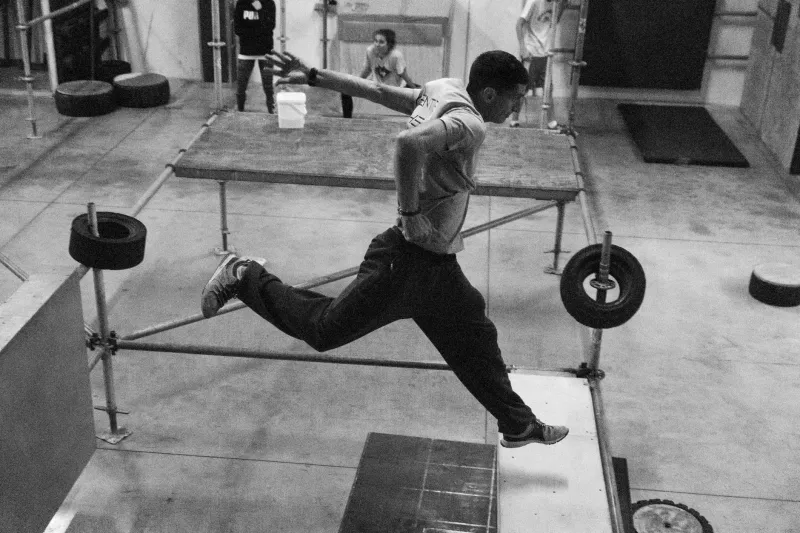
Marco Delgado runs a DIY obstacle workshop out of a warehouse space in Phoenix, building custom training setups for gyms, private clients, and the occasional film production. Over the past two years, he's noticed a shift in what people are requesting. "Used to be people came in with a training goal — I need to work on my balance, I need a specific height for precision practice. Now they come in with screenshots."
Those screenshots, more often than not, are pulled directly from viral clips. The aesthetic is consistent: clean welds, contrasting colors, modular setups that look good on camera from a low angle. "There's a specific kind of obstacle that films well," Delgado says. "Parallel rails at a certain height, a gap that reads clearly on screen, something with visual depth. I've built the same basic structure about forty times now with different paint jobs."
He's not complaining about the business. But he acknowledges the creative narrowing. "When everything is optimized for the same six-second window, you start losing the weird stuff. The weird stuff is usually where the best training happens."
The Aesthetic Is Converging
Scroll far enough and it becomes obvious. There's an emerging visual grammar to algorithm-friendly parkour content — urban but not too gritty, athletic but accessible-looking, with moves that have a clear beginning, middle, and payoff within the attention window the platform allows. Researchers who study digital sports culture have a term for this kind of convergence: platform aesthetics, the way a distribution system gradually homogenizes the content it hosts by rewarding certain patterns over others.
For parkour, that convergence is showing up in real space. Training gyms in LA, Chicago, and Atlanta are reporting similar layout requests. Content houses that specialize in action sports are building sets specifically engineered for FYP performance. Even some outdoor spots are being modified — rails added, surfaces cleaned up — to make them more camera-ready.
Skyler Nguyen, a parkour content creator with a following in the mid-six figures, is thoughtful about her own role in this. "I know what performs. I'd be lying if I said that doesn't affect what I film." She's deliberate about mixing in content that doesn't chase the algorithm — longer-form technique breakdowns, ugly training days, the stuff that gets a fraction of the views but keeps her audience honest. "If I only post the clean stuff, I'm basically advertising a version of parkour that doesn't exist."
The Counter-Movement
Not everyone is going along with it. There's a growing contingent of coaches and practitioners pushing back against what some are calling "FYP parkour" — a somewhat dismissive label for movement that's been optimized for virality at the expense of depth.
Some gyms are deliberately designing training environments that don't photograph well. Low-contrast surfaces, irregular spacing, setups that reward proprioception over spectacle. The logic is intentional friction: if the obstacle doesn't make a great clip, the athlete is forced to be there for the actual movement.
Kessler has started incorporating what he calls "dead air" drills into his sessions — extended movement sequences with no obvious peak moment, designed specifically to build the kind of sustained attention the algorithm has been quietly eroding. "Your body needs to know how to move for twenty minutes straight, not just for three seconds," he says. "But three seconds is what everyone's practicing for."
The Bigger Question
None of this means TikTok is bad for parkour. The platform has done real work in growing the audience, connecting practitioners across regions, and giving smaller athletes a path to visibility that didn't exist a decade ago. The F-Jump community alone has found some of its favorite spots and creators through exactly this pipeline.
But the feedback loop is worth naming. When a recommendation engine becomes the de facto curator of a physical discipline — shaping what gets built, what gets practiced, and what gets considered worth attempting — the sport starts to evolve on someone else's terms. Not a coach's terms, not a community's terms. An engagement metric's terms.
The athletes who are thriving right now seem to be the ones who've figured out how to work both sides: feed the algorithm enough to stay visible, but keep a private practice that the FYP never sees. The stuff that's genuinely hard, genuinely weird, and genuinely theirs.
That's probably always been the deal in action sports. The camera gets the highlight. The real work happens when nobody's watching.