Concrete Classrooms: Why DIY Obstacle Builders Are Outdesigning the Official Parkour Parks
The Official Version Wasn't Cutting It
Walk into most commercial parkour parks and you'll find the same setup: padded floors, color-coded obstacles at predictable heights, foam pits for the nervous crowd. It's clean. It's safe. And according to a growing faction of serious practitioners, it's kind of useless.
Across the US — from Detroit's hollowed-out factory belt to overgrown lots on the outskirts of Phoenix — athletes are doing something different. They're building their own spaces. Scrapping together platforms from reclaimed wood, welding steel rails in garages, stacking cinder blocks into walls that actually challenge the body instead of reassuring it. The DIY parkour construction movement isn't new, but it's accelerating, and the results are starting to turn heads.
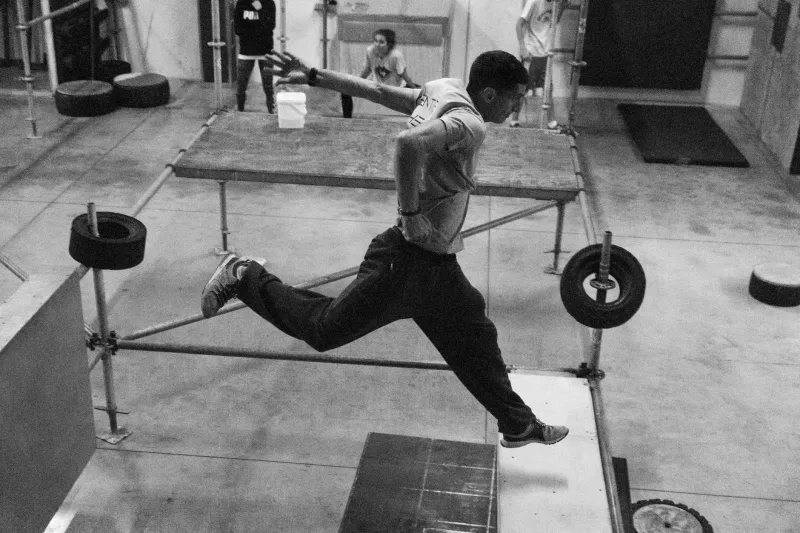
"A commercial park tells you exactly what to do," says Marcus Webb, a 26-year-old builder and traceur out of Pittsburgh who's spent the last three years constructing a sprawling training ground inside a decommissioned auto parts warehouse. "Everything's spaced for success. You clear it, you feel good, and then you do it again. Out here, nothing's designed for you. You have to figure it out, and that changes everything about how you move."
What Makes a Space Actually Train You
The difference between a good training environment and a great one isn't about equipment quality — it's about friction. Real friction. The kind that forces decision-making instead of pattern repetition.
Commercial parks are engineered to minimize failure. That sounds like a feature until you realize failure is where most athletic adaptation happens. When a surface is unpredictable, when the gap is slightly awkward, when the landing zone is uneven — that's when your nervous system actually gets to work.
Builders in the DIY scene talk about this constantly. They're not trying to make things dangerous for the sake of it. They're trying to make things real. Rough concrete behaves differently under your foot than a rubberized platform. A wooden rail with slight flex teaches your body something a rigid steel tube never will. These aren't just philosophical points — they're training variables that show up in performance.
Jordan Tess, who built a backyard course on private land in rural Tennessee with three training partners, puts it bluntly: "We spent maybe $800 total on materials over two years. Pallets, pipe fittings, some angle iron, whatever we could source locally. And I've improved more in those two years than in the five before them combined."
The Legal Gray Zone Nobody Talks About Loudly
Here's the part that gets complicated. A lot of these spaces exist in legal ambiguity that their builders are careful — and sometimes not careful enough — about navigating.
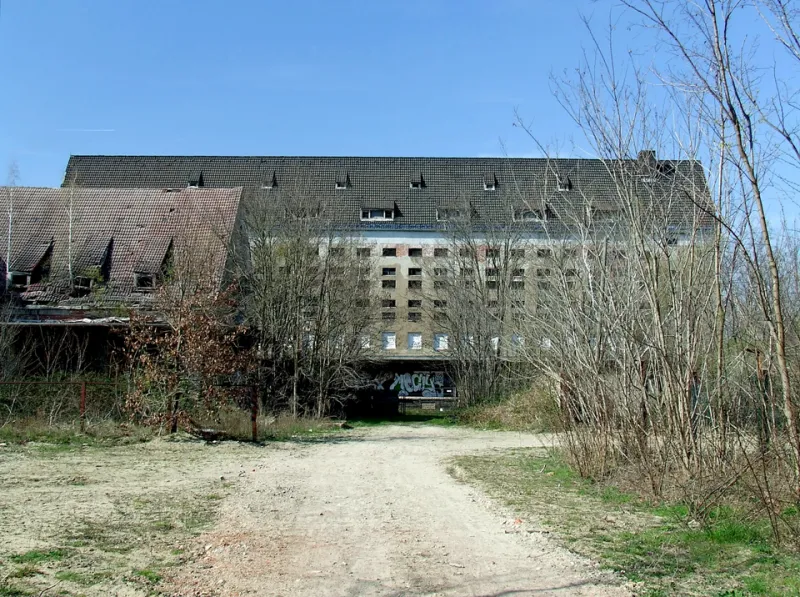
Some are built on private land with full permission from the property owner. Others occupy a murkier middle ground: abandoned industrial buildings where ownership is unclear, vacant lots that haven't seen active use in years, semi-public spaces where no one has officially said yes or no. The community generally doesn't advertise these spots. Locations spread through direct invitations and trusted networks, not Instagram posts with geotags.
"We're not trying to cause problems," says one builder in the Midwest who asked not to be named or located. "We maintain the space, we don't leave trash, we're not drawing attention. The last thing we want is to get someone's property condemned or get hit with a liability lawsuit."
That liability question is the real legal weight in the room. Even on private property with permission, an injury could theoretically expose a landowner to risk. Most DIY builders operate on a handshake understanding with property owners, sometimes drafting informal agreements acknowledging personal responsibility. It's not bulletproof, but it's a layer of protection, and it reflects a genuine attempt to operate responsibly within an unofficial system.
Some communities have gone further, forming loosely organized collectives that pool resources, share legal knowledge, and collectively negotiate with sympathetic landowners — sometimes offering to maintain or improve the property in exchange for access. It's a barter economy built around movement.
Constraint as a Design Philosophy
What's genuinely interesting about the best DIY spaces isn't just that they're improvised — it's that the improvisation itself has become a design philosophy.
When you can't buy a pre-engineered obstacle, you have to think about what you're actually trying to train. Builders in this scene tend to develop a much sharper understanding of movement mechanics than athletes who've only ever used purpose-built equipment. They're thinking about approach angles, surface texture, height variance, the relationship between obstacles in sequence. They're essentially doing applied biomechanics with a circular saw and a tape measure.
Marcus Webb describes his warehouse space as "always unfinished on purpose." He moves obstacles regularly, introduces new elements, occasionally tears things down entirely. The space is designed to prevent adaptation — or more accurately, to force continuous adaptation. "If you know the course, you're not training anymore. You're performing," he says. "I want people coming in here and having to think."
This philosophy has a real parallel in how elite athletes across disciplines talk about training environments. Variability isn't a bug — it's the whole point.
What the Commercial Parks Could Learn
None of this is an argument against commercial parkour facilities. They serve real purposes: they're accessible to beginners, they provide supervised environments for younger athletes, and they've helped bring parkour into mainstream fitness culture in ways that have genuinely grown the community.
But the DIY movement is sending a clear signal about what's missing at the high end of the development curve. Once an athlete has the fundamentals, the clean and controlled environment starts working against them. They need complexity. They need surfaces that don't cooperate. They need to make decisions under uncertainty.
A few forward-thinking gym operators are starting to pay attention. Some are experimenting with "rough zones" — sections of their facilities deliberately designed with irregular surfaces, variable heights, and less predictable obstacle placement. It's early, but it's a start.
For now, though, the athletes who are building their own spaces aren't waiting for the industry to catch up. They're hauling lumber, pouring concrete footings, and figuring it out the same way they figure out every challenging jump: by committing, adjusting, and going again.
Get In or Get Left Behind
If you're serious about developing as a mover, the question isn't whether DIY training environments are legitimate. At this point, the evidence is pretty hard to argue with. The question is how you find them — or whether you start building one yourself.
Start small. A few wooden platforms in a backyard, a rail at variable heights, a surface that isn't perfectly flat. Document what you're building, train smart, and connect with the communities that are already doing this. The knowledge-sharing in DIY parkour circles is genuinely generous — builders talk to builders, and most are happy to share what's worked and what's failed.
The concrete classroom is open. You just have to find the door.